

Private Equity & Value Creation
We help private equity firms turn portfolio company data into faster conviction, repeatable value-creation plays, and stronger exits.
OVERVIEW
The data exists inside every portfolio company. Unlocking it across the portfolio is the challenge.
In a private equity portfolio, every company already sits on operational data that could be used to drive growth and improve efficiency. The challenge is getting to that data, making sense of it consistently across companies, and turning it into solutions that create value at scale.
We help private equity firms and their portfolio companies do exactly that. From dedicated data lakehouses at each portfolio company to portfolio‑wide reporting, custom software, machine learning, and generative AI, we build a data foundation and solution set that make analytics a measurable lever for value creation, pre‑deal, during the hold period, and at exit.
WHAT WE HEAR FROM PRIVATE EQUITY LEADERS
No portfolio-wide visibility
0.1
Each portfolio company reports differently, making it labor‑intensive to assemble a consistent view of performance. Partners and operating teams spend cycles chasing numbers and reconciling KPIs instead of focusing on value‑creation levers and investment decisions.
Best practices stay siloed
0.2
Powerful analytics or AI solutions developed at one portfolio company rarely make it to the others. Each company solves similar problems from scratch, and the fund misses the chance to turn a single win into a repeatable play across the portfolio.
Tuck-in complexity
0.3
Acquisitions add new systems, data formats, and operating practices faster than the portfolio company can absorb them. During integration, leadership often flies blind on the combined business, creating risk around covenants, customer experience, and the original value‑creation thesis.
Limited internal analytics capacity
0.4
Portfolio companies rarely have the in‑house data and analytics talent to build the solutions that would actually drive value creation. Even when the thesis is clear, management teams lack the capacity to execute, and value‑creation plans stall or stay on spreadsheets.
COMMON SOLUTIONS
What we typically build for PE firms and their portfolio companies.
-
Portfolio-Wide Reporting
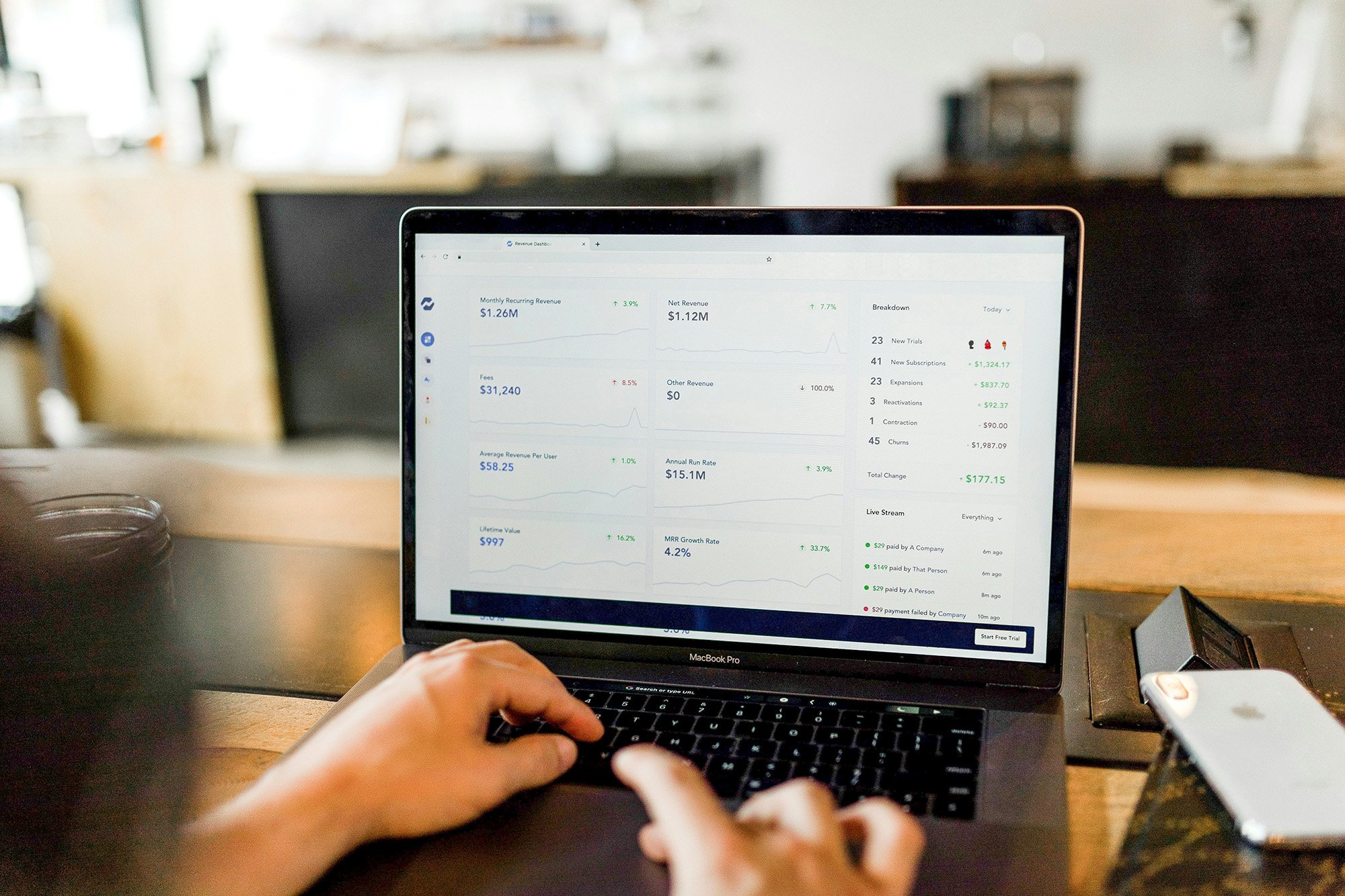
Each portfolio company runs different systems and reports differently, which makes consistent portfolio‑wide visibility painful to assemble. Investment and operating teams spend time stitching together spreadsheets before IC, board, and LP meetings instead of focusing on decisions.
We build a centralized reporting layer that pulls KPIs from each portfolio company, normalizes them through agreed business logic, and presents them in a single, easy‑to‑read format. The firm keeps a finger on the pulse of the entire portfolio by fund, sector, or strategy, without chasing management teams for updated numbers.✓Apples-to-apples comparison across portfolio companies
✓Revenue, EBITDA, and operational KPIs in one view
✓Drill-down from portfolio summary to individual company performance
✓Automated refresh from each portfolio company's source systems
-

Pre-Deal Analytics
Pre‑deal analytics gives the deal team a deeper read on the target than the data room alone can provide. Working closely with your deal team and the target’s data, we use large‑scale data analysis, machine learning, and AI techniques to surface growth opportunities, efficiency levers, and risks that strengthen or challenge the investment thesis.
The output is a set of concrete insights that can be factored into the bid, the offer letter, lender conversations, and the first hundred days plan, giving your firm a differentiated point of view versus other bidders.✓White space and customer retention modeling
✓Profitability and cost-to-serve analysis at the transaction level
✓Operational efficiency analysis on supply chain, logistics, or production
✓Rapid turnaround built around deal timelines
-

360-Degree Portfolio Company Analytics
Each portfolio company needs its own data foundation and analytics layer to actually move the business and deliver the value‑creation plan. We build dedicated data lakehouses and a suite of 360‑degree dashboards that span the boardroom, middle management, and frontline teams.
Each level works from scorecards tied back to management’s priorities and the investment thesis, so the whole organization is pulling in the same direction—and partners can see progress against the plan in near real time.✓Dedicated lakehouse for each portfolio company
✓Boardroom dashboards tied to management's strategic priorities
✓Middle management and frontline scorecards
✓Near real-time refresh on the metrics that drive the business
-

Custom Software, ML & AI at Portfolio Companies
Once a portfolio company has a clean data foundation in place, the range of solutions that becomes possible grows quickly. We build custom software, machine learning models, and generative AI applications tailored to the operational reality of each business—quote calculators for sales, route optimization for delivery, SKU‑level profitability analysis for management, and more. Each successful solution becomes a playbook that can be adapted and redeployed across the rest of the portfolio, reducing time‑to‑value and spreading operating leverage from one company to many.
✓Custom software tailored to the portfolio company's operations
✓Machine learning models for forecasting, scoring, and optimization
✓Generative AI applications integrated into team workflows
✓Reusable playbooks that can be deployed across the portfolio
Q&A
Things we hear from private equity leaders.
The questions every PE partner, operating partner, and deal lead asks us in their first meeting.
-
There are three common approaches:
Decentralized: Each portfolio company runs its own analytics stack. This offers maximum flexibility but makes it harder to share solutions across the portfolio.
Centralized: Everything sits on a single stack run by the PE firm. This reduces cost and makes solution sharing easy but places a heavy burden on the PE firm itself.
Hybrid: Portfolio companies own their analytics, deciding which questions to answer, which use cases to pursue, and how insights feed their decisions. They do this on a common set of best-in-class tools and frameworks, so new companies can be onboarded quickly and solutions built at one company can be shared, replicated, and aggregated across the portfolio.
We typically help firms design and implement a hybrid approach.
-
Off‑the‑shelf PE platforms come with built‑in assumptions about how a portfolio should be reported and run. Those assumptions rarely match the reality of any one portfolio company, much less an entire portfolio of businesses across different industries, geographies, and operating models.
We build tailored solutions that fit how each portfolio company actually works, then connect them into a portfolio‑wide view that uses the language and metrics your firm already uses.
-
Successful solutions become playbooks. When we build something at one portfolio company that’s delivering real value, we capture the underlying logic, data structure, and design patterns in a way that lets us redeploy it elsewhere with less time, effort, and cost than the original build.
The result is that a quote calculator built for one portfolio company can be adapted for another in a fraction of the time, and a profitability analysis built for one becomes a template the next portfolio company can stand on.
-
PE portfolios are rarely homogeneous, and we design our work accordingly. Each portfolio company engagement starts with a focused effort to understand the business model, key value drivers, and operational rhythm before any technical work begins.
We’ve delivered work across logistics, manufacturing, financial services, hospitality, and retail and consumer businesses, so the team brings both technical depth and industry pattern recognition into every engagement. The data foundation underneath stays consistent, but the analytics and solutions on top are always tailored to the specific business.
-
No. Each portfolio company keeps the systems already running its business. We build a centralized data foundation underneath that pulls data from those systems, so the company keeps operating in the tools it knows while the PE firm gets a unified view across the portfolio. System changes only come into play when there's a clear business case, and even then it's a separate conversation from the analytics work.
-
Yes, with the right setup. Pre-deal work requires close coordination with your deal team, gaining access to the target's data, working within tight deal timelines, and using big data and AI techniques to surface insights quickly enough to be factored into the investment thesis. When we work hand in glove with the deal team, the result is sharper conviction on opportunities and risks that other bidders may not have spotted.
-
Management teams at portfolio companies are the ones who have to live with and benefit from the analytics work, so we treat that relationship as central, not secondary. We engage management as the primary day‑to‑day stakeholder on every portfolio company engagement, get clear alignment on priorities before we build, and make sure each solution we deliver is something the management team actively wants and will use.
The PE firm stays in the loop on progress and outcomes, but the work itself is built around the management team’s reality.
-
Speed depends on the data infrastructure already in place, but in most cases we can have a new portfolio company integrated into the reporting layer within four to six weeks.
For tuck‑in acquisitions, where the data is being absorbed into an existing portfolio company, we typically work alongside the integration team to ensure the new company’s data flows into the same foundation from day one, so leadership doesn’t lose visibility during the integration period.
-
We design every engagement to deliver real value early, whether the work is at the PE firm level or inside a portfolio company. Most portfolio company engagements produce their first solution within four to eight weeks of kickoff, with additional solutions following close behind. Portfolio-wide reporting takes longer to assemble because of the coordination across multiple companies, but we design the rollout so the first companies are reporting and adding value before the last ones are even integrated.

Curious what your portfolio's data could do for value creation?
Set up a 30-minute conversation with one of our partners to talk through your portfolio, where data sits across your companies today, and where it could be working harder for you.